
 UAE
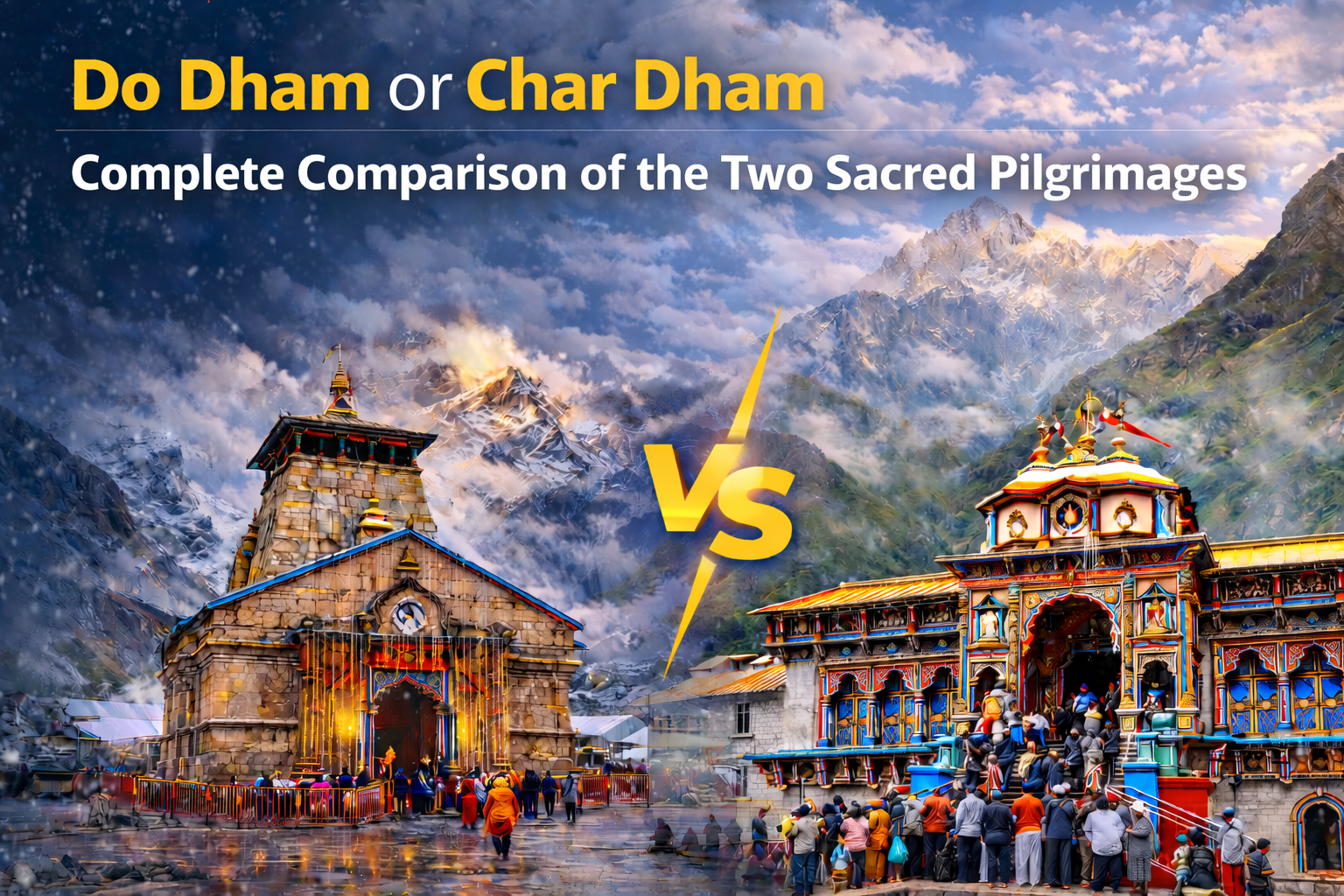
UAEDo Dham or Char Dham: Complete Comparison of the Two Sacred Pilgrimages
📑 Table of Contents
The Himalayan state of Uttarakhand is home to some of the most sacred pilgrimage destinations in India. Among these spiritual journeys, two routes attract thousands of devotees every year: the Char Dham Yatra and the Do Dham Yatra. Pilgrims planning a trip to the Himalayas often wonder which option is more suitable for them and whether they should choose the Do Dham Yatra package or the complete Char Dham pilgrimage.
Both journeys hold deep significance in Hindu spirituality and are believed to bring divine blessings, spiritual purification, and inner peace. These pilgrimages take devotees through the breathtaking landscapes of the Himalayas, where they visit ancient temples that have been revered for centuries. The peaceful surroundings of rivers, forests, and snow-covered mountains create a unique spiritual atmosphere that enhances the experience of the yatra.
The Char Dham Yatra includes visits to four sacred temples located in the Garhwal Himalayas: Yamunotri, Gangotri, Kedarnath, and Badrinath. This pilgrimage is considered a complete spiritual circuit, connecting devotees with holy river origins and powerful deities. For many believers, completing the entire Char Dham journey represents a significant spiritual achievement, and choosing a well-organized Char Dham Yatra Package can make this extensive journey more convenient and comfortable.
The Do Dham Yatra, on the other hand, focuses on two of the most important temples in the Char Dham circuit: Kedarnath and Badrinath. These shrines hold immense religious importance and are visited by millions of devotees each year. The Do Dham pilgrimage is often preferred by travelers who want to experience the spiritual energy of the Himalayas but have limited time or travel constraints.
Understanding the differences between Do Dham and Char Dham can help pilgrims choose the most suitable pilgrimage based on factors such as travel duration, physical endurance, spiritual goals, and personal preferences. By selecting the right journey, devotees can ensure a comfortable and spiritually fulfilling yatra in the sacred Himalayan region
Meaning and Concept of Char Dham Yatra
The Char Dham Yatra is regarded as one of the most sacred pilgrimages in Hinduism. The term "Char Dham" literally means "four sacred abodes," referring to four holy temples located in the Himalayan region of Uttarakhand. These shrines are believed to represent different aspects of divine energy and spiritual purification, making the pilgrimage deeply meaningful for devotees.
The four temples included in the Char Dham pilgrimage are:
-
Yamunotri
-
Gangotri
-
Kedarnath
-
Badrinath
Each of these sacred sites holds unique religious significance and is associated with important deities and holy rivers in Hindu tradition. The temples are situated in the breathtaking Himalayan landscape, surrounded by glaciers, flowing rivers, dense forests, and snow-covered mountain peaks, which further enhance the spiritual atmosphere of the journey.
Traditionally, the Char Dham Yatra follows a specific pilgrimage order, which pilgrims have followed for generations:
-
Yamunotri
-
Gangotri
-
Kedarnath
-
Badrinath
This sequence is believed to symbolize a gradual path of spiritual purification and devotion, guiding pilgrims through different stages of faith and divine connection.
The Char Dham Yatra is often considered a complete Himalayan pilgrimage because it combines visits to sacred temples, holy river sources, and powerful spiritual centers dedicated to both Lord Shiva and Lord Vishnu. For many devotees, the journey represents an opportunity to deepen their faith, seek blessings, and experience the divine presence in the serene surroundings of the Himalayas.
For centuries, pilgrims from across India have undertaken this sacred journey with the belief that completing the Char Dham Yatra helps cleanse past sins, purify the soul, and move closer toward spiritual liberation (moksha).
Meaning and Concept of Do Dham Yatra
The Do Dham Yatra is a shorter version of the famous Char Dham pilgrimage and includes visits to two highly sacred temples in the Himalayan region of Uttarakhand: Kedarnath and Badrinath. These temples hold immense importance in Hindu tradition and attract millions of devotees every year who come to seek blessings, spiritual peace, and divine guidance.
Temples Included in the Do Dham Yatra
The pilgrimage focuses on two major shrines:
-
Kedarnath Temple – Dedicated to Lord Shiva
-
Badrinath Temple – Dedicated to Lord Vishnu
Both temples are among the most revered pilgrimage sites in India and form an important part of the larger Char Dham circuit. Visiting these sacred shrines allows devotees to experience the spiritual energy of the Himalayas while connecting with two of the most powerful deities in Hindu belief.
The Kedarnath–Badrinath Yatra is considered spiritually significant because it represents a balance between two important cosmic forces in Hindu philosophy. Lord Shiva is associated with transformation, spiritual awakening, and the destruction of negativity, while Lord Vishnu symbolizes preservation, protection, and compassion toward humanity.
Many pilgrims choose the Do Dham pilgrimage when they want a meaningful spiritual journey but have limited time or travel constraints. Compared to the full Char Dham Yatra, this pilgrimage requires fewer travel days while still offering a powerful devotional experience.
Despite being shorter in duration, the Do Dham Yatra remains deeply spiritual and fulfilling, as both Kedarnath and Badrinath are among the holiest temples in India and hold immense religious significance for devotees. The journey through the Himalayan landscapes, combined with temple visits and rituals, makes the pilgrimage a memorable experience of faith and devotion.
Temples Included in Char Dham Yatra
The Char Dham Yatra is one of the most sacred pilgrimages in the Himalayan region of Uttarakhand. It includes visits to four revered temples: Yamunotri, Gangotri, Kedarnath, and Badrinath. Each temple holds deep spiritual, mythological, and religious significance, and together they represent a complete journey of devotion and purification for Hindu pilgrims.
Yamunotri Temple
The pilgrimage traditionally begins with a visit to the Yamunotri Temple, which is dedicated to the Goddess Yamuna. The temple marks the origin of the Yamuna River, one of the most sacred rivers in India. Devotees believe that worshipping Goddess Yamuna protects them from suffering and grants blessings of health, purity, and prosperity. Pilgrims must trek through a scenic mountain path to reach the temple, and this trek is often seen as an act of devotion and spiritual discipline.
Gangotri Temple
The next stop in the pilgrimage is Gangotri Temple, the sacred source of the River Ganga. The Ganga is regarded as the holiest river in Hindu tradition and is believed to have the divine power to cleanse sins and purify the soul. At Gangotri, pilgrims offer prayers, perform rituals, and take part in religious ceremonies along the riverbanks, making it a deeply spiritual part of the journey.
Kedarnath Temple
Kedarnath Temple, dedicated to Lord Shiva, is one of the twelve sacred Jyotirlingas and holds immense importance in Hindu mythology. Located at an altitude of over 3,500 meters in the Garhwal Himalayas, the temple is surrounded by towering snow-capped peaks and breathtaking natural beauty. Pilgrims usually undertake a challenging trek to reach the shrine, which makes visiting Kedarnath one of the most spiritually intense and memorable parts of the Char Dham Yatra.
Badrinath Temple
The final destination of the pilgrimage is the Badrinath Temple, dedicated to Lord Vishnu. Situated on the banks of the Alaknanda River, the temple is one of the most revered pilgrimage sites in Hinduism. Devotees visit Badrinath to seek divine protection, spiritual guidance, and blessings for a prosperous life. The temple’s serene setting and deep religious importance make it a fitting conclusion to the sacred Char Dham journey.
Together, these four temples represent a complete spiritual circuit, guiding pilgrims through a journey of faith, purification, and devotion in the sacred Himalayan landscape.
Temples Included in Do Dham Yatra
The Do Dham Yatra focuses on visiting two of the most important and sacred temples in the Himalayan region, Kedarnath and Badrinath. These temples hold immense religious significance in Hindu tradition and are visited by millions of devotees every year who come seeking blessings, peace, and spiritual fulfillment.
Kedarnath Temple, dedicated to Lord Shiva, is one of the twelve Jyotirlingas and is considered a powerful center of spiritual energy. Located in the majestic Garhwal Himalayas, the temple symbolizes devotion, penance, and spiritual transformation. Many pilgrims believe that visiting Kedarnath helps cleanse past sins and brings inner strength and peace.
Badrinath Temple, dedicated to Lord Vishnu, is another highly revered pilgrimage site and forms part of both the Char Dham and the Do Dham pilgrimage routes. The temple represents divine protection, compassion, and spiritual enlightenment. Devotees visit Badrinath to seek the blessings of Lord Vishnu and to experience a deep sense of devotion and tranquility.
Together, these two temples create a balanced and spiritually enriching pilgrimage, where devotees connect with both Lord Shiva and Lord Vishnu. The journey combines devotion, purification, and divine grace, making the Do Dham Yatra a meaningful spiritual experience for pilgrims.
Spiritual Significance of the Pilgrimage
The Do Dham and Char Dham pilgrimages are not only journeys across the Himalayan region but also deeply meaningful spiritual experiences for devotees. For generations, pilgrims have traveled to these sacred shrines with faith and devotion, believing that the journey brings them closer to the divine and helps them achieve spiritual growth.
Throughout the pilgrimage, travelers pass through the majestic landscapes of the Himalayas while chanting prayers, participating in temple rituals, and seeking blessings from the revered deities. The act of undertaking the journey itself is considered an important form of devotion. Many pilgrims view the challenges of traveling through mountains and high-altitude regions as part of their spiritual discipline and dedication.
Devotees believe that completing the pilgrimage can bring several spiritual and emotional benefits, such as:
-
Purification of the soul
-
Removal of negative karma from past actions
-
Strengthening of faith and devotion toward the divine
-
Developing a deeper connection with spiritual energy
-
Progress toward spiritual liberation, often referred to as moksha
In addition to its religious importance, the natural beauty of the Himalayas plays a major role in shaping the spiritual atmosphere of the journey. The peaceful surroundings, flowing rivers, sacred ghats, and towering snow-covered peaks create a sense of calm and reflection that enhances the overall pilgrimage experience.
For many devotees, the yatra becomes more than just visiting temples; it becomes a journey of faith, self-discovery, and spiritual renewal that leaves a lasting impact on their lives.
Char Dham vs Do Dham: Key Differences
Understanding the difference between the Char Dham Yatra and the Do Dham Yatra helps pilgrims choose the journey that best fits their time, physical ability, and travel preferences. While both pilgrimages are spiritually significant and take place in the sacred Himalayan region of Uttarakhand, they differ in several important aspects.
Number of Temples
The Char Dham Yatra includes visits to four sacred temples: Yamunotri, Gangotri, Kedarnath, and Badrinath. In contrast, the Do Dham Yatra includes two temples, usually Kedarnath and Badrinath, which are among the most important pilgrimage sites in the region.
Duration
Because it covers four destinations, the Char Dham Yatra generally requires more time to complete, often taking around 10 to 12 days depending on the itinerary. The Do Dham Yatra, on the other hand, is shorter and more time-efficient, typically completed within 5 to 7 days.
Travel Distance
The Char Dham pilgrimage involves a longer travel route across different valleys and mountain regions of Uttarakhand. The Do Dham journey is comparatively shorter since it focuses only on Kedarnath and Badrinath.
Difficulty Level
The Char Dham Yatra can be more physically demanding due to longer travel distances and multiple trekking routes, including the trek to Yamunotri and Kedarnath. The Do Dham Yatra is relatively easier as it includes fewer travel segments and a simpler itinerary.
Overall, the Char Dham Yatra offers a complete traditional pilgrimage experience, while the Do Dham Yatra provides a shorter and more manageable spiritual journey.
Duration of Both Yatras
The duration of the pilgrimage is one of the key factors pilgrims consider when deciding between the Do Dham Yatra and the Char Dham Yatra. Since both journeys involve travel through mountainous regions of Uttarakhand, the time required largely depends on the number of temples included in the itinerary and the overall travel distance.
The Char Dham Yatra usually takes around 10 to 12 days to complete. This is because the pilgrimage includes visits to four sacred temples: Yamunotri, Gangotri, Kedarnath, and Badrinath. The journey involves long road travel through Himalayan valleys, along with trekking routes to certain temples, which naturally increases the overall duration.
In comparison, the Do Dham Yatra generally takes about 5 to 7 days since it covers only two major temples, Kedarnath and Badrinath. With fewer destinations and shorter travel distances, the itinerary becomes more manageable for many travelers.
For this reason, many pilgrims prefer the shorter Do Dham journey when they have limited time but still wish to experience the spiritual atmosphere and blessings of the Himalayan temples.
Travel Route and Itinerary Comparison
Both the Do Dham Yatra and the Char Dham Yatra follow well-established pilgrimage routes through the scenic Himalayan region of Uttarakhand. These routes connect several holy towns, river valleys, and mountain roads that lead pilgrims to the sacred temples.
Char Dham Yatra Route
The traditional Char Dham itinerary follows a specific sequence that pilgrims have followed for generations:
Haridwar → Yamunotri → Gangotri → Kedarnath → Badrinath
The char dham yatra route covers all four sacred shrines and involves traveling through multiple Himalayan valleys, hill towns, and pilgrimage stops. Because it includes four destinations, the journey usually takes more time and involves longer travel distances.
Do Dham Yatra Route
The Do Dham Yatra follows a shorter and more direct route:
Haridwar → Kedarnath → Badrinath
Since it covers only two temples, the journey takes less time, making the Do Dham Yatra itinerary easier to complete, especially for travelers with limited time.
Overall, the Char Dham route is longer and more extensive, offering a complete pilgrimage experience across the Garhwal Himalayas. In contrast, the Do Dham route is shorter and more convenient, making it a popular option for pilgrims who prefer a less time-consuming journey while still visiting two of the most important sacred temples.
Difficulty Level and Trekking Requirements
The Char Dham pilgrimage generally requires greater physical endurance because it involves longer travel distances and trekking routes to certain temples. Pilgrims must trek to reach Yamunotri and Kedarnath, which can be physically demanding due to steep mountain paths and higher altitudes.
In comparison, the Do Dham Yatra is relatively less demanding since it covers fewer destinations. Although the Kedarnath trek is still part of the journey, the overall travel distance and duration are shorter than the complete Char Dham route.
To make the pilgrimage easier, many travelers opt for alternative travel options such as helicopter services, pony rides, or palki services, which help reduce the physical strain while allowing pilgrims to complete the sacred journey comfortably.
Best Time to Visit the Yatras
The temples associated with both pilgrimages remain open only during specific months of the year due to the harsh winter conditions in the Himalayas. Generally, the temple doors open in late spring and stay accessible until early autumn.
The best time to undertake these yatras is usually between May and October, when weather conditions are relatively stable, and travel routes become accessible. During these months, roads, trekking paths, and essential facilities for pilgrims are fully operational.
Traveling in this period allows pilgrims to experience pleasant weather, safer road conditions, and smoother temple access, making the spiritual journey more comfortable and manageable. However, it is always advisable to check weather forecasts and travel advisories before planning the pilgrimage.
Which Yatra is Better for Pilgrims?
Choosing between the Do Dham Yatra and the Char Dham Yatra largely depends on a pilgrim’s available time, physical fitness, and personal spiritual goals. Both journeys hold great religious importance and offer a deeply spiritual experience in the sacred Himalayas.
Pilgrims who wish to complete the traditional and full pilgrimage often choose the Char Dham Yatra, as it includes visits to all four holy shrines: Yamunotri, Gangotri, Kedarnath, and Badrinath. Completing the entire circuit is considered highly sacred in Hindu tradition.
On the other hand, travelers with limited time or those looking for a shorter and less demanding journey may prefer the Do Dham Yatra. This pilgrimage usually includes Kedarnath and Badrinath and still provides a powerful spiritual experience while being more convenient to complete.
Which Yatra is Suitable for Elderly Travelers?
For elderly pilgrims, choosing a shorter and more comfortable pilgrimage option is often the best decision. The Do Dham Yatra, which usually includes visits to Kedarnath and Badrinath, is generally considered more suitable for senior travelers.
Compared to the complete Char Dham circuit, the Do Dham pilgrimage has a shorter duration and reduced travel distance, making it easier to manage physically. The journey involves fewer long road trips and allows pilgrims to travel at a more relaxed pace.
In addition, many tour operators offer senior-friendly travel arrangements such as guided tours, well-planned itineraries, comfortable accommodations, and transportation services. For those who want to avoid long treks, helicopter services are also available, especially for Kedarnath, allowing elderly pilgrims to complete the pilgrimage safely and conveniently.
With proper planning and assistance, senior travelers can enjoy a smooth, comfortable, and spiritually fulfilling yatra.
Travel Preparation Tips for Pilgrims
Proper preparation is essential before beginning any Himalayan pilgrimage. The journey to sacred destinations in the mountains involves changing weather conditions, long travel hours, and sometimes trekking at higher altitudes. Being well prepared helps pilgrims stay safe, healthy, and comfortable throughout the yatra.
Pilgrims should consider the following travel tips before starting their journey:
-
Carry Warm Clothing: Weather in the mountains can change quickly, so packing warm layers, jackets, and shawls is important even during the summer months.
-
Wear Comfortable Trekking Shoes: Good-quality trekking or walking shoes provide proper grip and support, especially on uneven paths and temple trails.
-
Carry Essential Medicines: Keep basic medicines, personal prescriptions, first-aid supplies, and items like pain relievers, bandages, and altitude sickness tablets.
-
Stay Hydrated: Drink sufficient water during the journey to avoid dehydration and fatigue, especially while walking or trekking in higher altitudes.
-
Follow Travel Advisories: Always follow local guidelines, weather updates, and safety instructions provided by authorities or tour guides.
With proper planning and preparation, pilgrims can enjoy a safe, comfortable, and spiritually fulfilling journey in the Himalayas.
Conclusion
The decision between Do Dham and Char Dham depends on individual travel goals, available time, and physical ability. Referring to a detailed Do Dham Yatra guide can help pilgrims make an informed choice based on their needs. The Char Dham Yatra offers a complete and traditional pilgrimage that covers four sacred temples and provides a deeper spiritual journey through the Himalayas, while the Do Dham Yatra offers a shorter but equally meaningful pilgrimage focusing on the divine shrines of Kedarnath and Badrinath.
Both journeys allow devotees to experience the spiritual beauty of the Himalayas and seek blessings from ancient temples. With proper planning and preparation, either pilgrimage can become a truly unforgettable spiritual experience.
Frequently Asked Questions About Do Dham and Char Dham Yatra
1. What is the difference between the Do Dham Yatra and the Char Dham Yatra?
The main difference between the two pilgrimages is the number of temples included. The Char Dham Yatra covers four sacred temples in Uttarakhand—Yamunotri, Gangotri, Kedarnath, and Badrinath. The Do Dham Yatra is a shorter pilgrimage that includes only Kedarnath and Badrinath. Char Dham is a longer journey, while Do Dham is a more time-efficient option.
2. Which temples are included in the Char Dham Yatra?
The Char Dham Yatra includes four important temples located in the Himalayan region of Uttarakhand:
-
Yamunotri Temple is dedicated to the Goddess Yamuna
-
Gangotri Temple is dedicated to the Goddess Ganga
-
Kedarnath Temple is dedicated to Lord Shiva
-
Badrinath Temple is dedicated to Lord Vishnu
Together, these temples form one of the most sacred pilgrimage circuits in Hindu tradition.
3. Which temples are included in the Do Dham Yatra?
The Do Dham Yatra includes two major pilgrimage sites in Uttarakhand:
-
Kedarnath Temple is dedicated to Lord Shiva
-
Badrinath Temple is dedicated to Lord Vishnu
This journey is considered a shorter version of the Char Dham pilgrimage and is popular among travelers with limited time.
4. Which Yatra is better, Do Dham or Char Dham?
Both pilgrimages are spiritually meaningful, but the choice depends on time, fitness level, and travel preferences. Char Dham offers a complete spiritual journey covering four sacred temples, while Do Dham is a shorter and easier option that still includes two of the most important shrines in the Himalayas.
5. How many days are required for Char Dham Yatra and Do Dham Yatra?
A typical Char Dham Yatra usually takes around 10 to 12 days to complete, depending on travel routes and weather conditions. The Do Dham Yatra generally takes 5 to 7 days, making it a convenient option for travelers with limited time.
6. What is the meaning and concept of Char Dham Yatra?
The Char Dham Yatra represents a sacred pilgrimage that connects devotees with four holy temples and important rivers in the Himalayas. The journey symbolizes spiritual purification and devotion, guiding pilgrims through sacred locations dedicated to important Hindu deities.
7. What is the spiritual significance of the Do Dham and Char Dham Yatra?
Both pilgrimages hold deep spiritual significance in Hinduism. Visiting these temples is believed to bring spiritual growth, inner peace, and divine blessings. Devotees often undertake these journeys as a way to strengthen their faith and seek spiritual purification.
8. What is the travel route map for Char Dham Yatra?
The traditional route for the Char Dham Yatra usually begins from Haridwar or Rishikesh and follows this sequence: Yamunotri → Gangotri → Kedarnath → Badrinath. This order is followed for religious and geographical reasons and helps pilgrims complete the journey in a systematic way.
9. When is the best time to visit Char Dham and Do Dham Yatra?
The best time to visit both Char Dham and Do Dham Yatra is typically between May and June and again from September to October. These months usually offer better weather conditions for travel in the Himalayan region.
10. Which Yatra is suitable for elderly travelers, Do Dham or Char Dham?
For many elderly travelers, the Do Dham Yatra is often more suitable because it requires fewer travel days and involves fewer locations. However, with proper planning, comfortable transportation, and support services, senior citizens can also complete the Char Dham Yatra safely.

Kinghills Travel
Travel expert specializing in spiritual journeys across India, with a strong focus on Do Dham and Char Dham Yatra. Passionate about helping travelers experience divine destinations with proper guidance, comfort, and authentic insights. Provides well-researched, practical information to make every pilgrimage smooth and meaningful.
Areas of Expertise:
Credentials:
Years of experience in pilgrimage planning, route guidance, and temple-based travel content.


