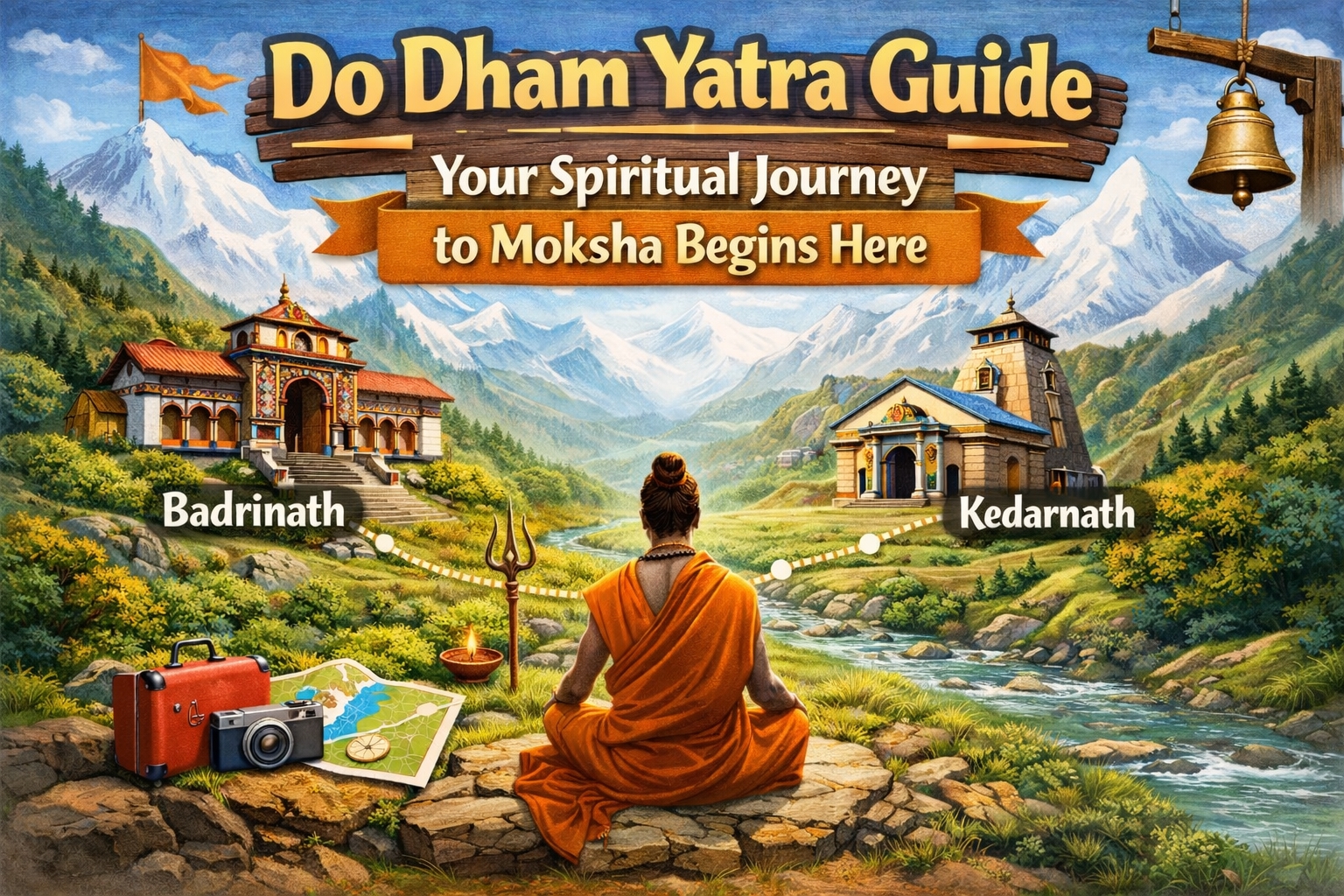
The Do Dham Yatra, also referred to as the 2 Dham Yatra, is a religious journey that leads pilgrims to two of the most revered temples in the Garhwal Himalayas, namely Kedarnath and Badrinath. Although the Char Dham Yatra is a more extensive journey that leads to four temples (Yamunotri, Gangotri, Kedarnath, and Badrinath), the Do Dham Yatra is preferred by many pilgrims as it leads to two of the most important temples, which is ideal for those who have less time.
This comprehensive guide to the Do Dham Yatra provides you with everything you need—from details about the temples and the best time to visit, to travel routes, a day-by-day itinerary, nearby attractions, accommodation options, essential packing tips, and the benefits of choosing a Do Dham Yatra package for a smooth and well-organized journey.
Which Temples Are Included in the Do Dham Yatra?
The Do Dham Yatra is a journey that solely targets two Himalayan shrines in Uttarakhand. These shrines symbolize two strong pillars of the Hindu religion – Lord Shiva and Lord Vishnu. They collectively make a complete spiritual journey.
Kedarnath Temple
Kedarnath Temple is one of the holiest shrines of Lord Shiva and is recognized as one of the twelve Jyotirlingas in India. It is situated at an average height of 3,583 meters in the Garhwal Himalayan ranges. The temple is surrounded by snow-capped mountains and the Mandakini River. The spiritual environment of Kedarnath is associated with the Mahabharata, as it is said that the Pandavas constructed this temple to apologize to Lord Shiva for the Kurukshetra war.
To reach Kedarnath, one needs to be pious and determined, as the trek from Gaurikund or Sonprayag to Kedarnath is 16-22 km long. This trek is also a part of the spiritual cleansing ritual. The temple is made up of huge stone slabs and has been able to withstand harsh weather conditions for so many years. The aarti ceremony performed in the evening at Kedarnath is a spiritual experience in itself. For devotees, a visit to Kedarnath helps them attain liberation and peace.
Badrinath Temple
Badrinath Temple is a highly revered Vaishnav pilgrimage center in India and is dedicated to Lord Vishnu in his form as Badrinarayan. Situated at an average height of 3,133 meters on the banks of the Alaknanda River, the temple is surrounded by the majestic Neelkanth Peak, making it a divine location. As per Hindu mythology, Lord Vishnu performed penance here for thousands of years, and the temple was later restored by Adi Shankaracharya in the 8th century.
The temple contains a black stone image of Lord Vishnu in a meditative pose, which is believed to be self-created (Swayambhu). It is customary for devotees to take a holy dip in the nearby Tapt Kund hot water spring before entering the temple, as it is believed to be spiritually cleansing. The colorful temple front, soothing sound of the river, and cool mountain air make it a divine location. Badrinath is believed to provide spiritual, material, and worldly salvation to devotees. It is also one of the original Char Dham places established in different parts of India, adding to its religious significance.
Together, Kedarnath and Badrinath comprise the holy heart of the 2 Dham Yatra, providing devotees with a unique chance to attain blessings from both Lord Shiva and Lord Vishnu within the same journey.
Best Time to Do Dham Yatra
Selecting the appropriate time for your Do Dham Yatra is highly essential as the Kedarnath and Badrinath temples are open for a limited period of time in a year. The heavy snowfall in the winter season and monsoon weather makes it difficult to decide on the dates for the yatra. The weather in the Himalayan regions keeps fluctuating, and the road conditions also depend on the month you select for your journey.
Though the temples open in April/May and close in October/November, not all months are apt for traveling. Some months are apt for a clear view and smooth darshan, while others can be risky due to landslides or extreme cold weather. The following is a detailed season-wise guide to help you select the apt time for your journey.
Season-Wise Guide for Do Dham Yatra
Quick Summary
-
Best Overall Time: September to October
-
Most Popular Time: May to June
-
Avoid Travel: July to August (monsoon risks)
-
Temples Closed: November to March
Selecting the right season ensures a safer, smoother, and more spiritually fulfilling Do Dham Yatra experience.
Do Dham Yatra Route Map
The traditional Do Dham Yatra map for a road journey typically involves a loop circuit that joins both shrines in a smooth manner:
Haridwar / Rishikesh → Guptkashi → Sonprayag / Gaurikund (Kedarnath Base) → Kedarnath → Guptkashi → Joshimath → Badrinath → Haridwar / Rishikesh.
This helps in a planned journey with halts and visits to nearby confluence points and river ghats.
If you choose to undertake a Do Dham Yatra by helicopter, the journey is shorter and quicker, involving a flight from Dehradun to Phata/Phoolchatti helipad, then to Kedarnath and Badrinath, and back home – typically in 3-4 days.
Day-by-Day Itinerary for Do Dham Yatra from Haridwar
Here’s a practical 6-7-day itinerary most devotees follow for a complete 2-Dham experience:
Day 1: Haridwar / Rishikesh → Guptkashi
Your journey begins early from Haridwar or Rishikesh. The drive takes you through scenic Himalayan foothills.
-
Arrive in Guptkashi and check into a hotel.
-
Rest and acclimatize to the altitude.
Day 2: Guptkashi → Kedarnath (Trek Start)
Depart early to the base point (Sonprayag / Gaurikund). From here, begin the trek to Kedarnath.
-
The trek is approx. 16–18 km.
-
You can take a pony or doli at your own cost or walk.
-
Reach Kedarnath by evening for darshan and attend evening Aarti.
Day 3: Kedarnath → Guptkashi
After a serene early morning darshan, trek back to the base and return to Guptkashi for rest.
-
Enjoy the mountain views.
-
Relax after the devotional day.
Day 4: Guptkashi → Joshimath
Depart toward Joshimath after breakfast. En route, you may visit scenic river confluences and valleys like Rudraprayag and Karnaprayag.
-
Overnight stay in Joshimath.
-
Prepare for Badrinath visit next day.
Day 5: Joshimath / Pipalkoti → Badrinath
Drive to Badrinath Temple early morning.
-
Visit Badrinath Temple.
-
Take a holy dip in the Tapt Kund before darshan.
-
Explore nearby Mana Village and other attractions.
-
Return to Joshimath / Pipalkoti for overnight stay.
Day 6: Badrinath → Haridwar / Rishikesh
Begin the return journey to Haridwar or Rishikesh.
-
Optionally visit Devprayag on your way back.
Nearby Places to Visit Around Kedarnath
Bhairav Temple
This is a small temple, which is at a short walk from the Kedarnath Temple. It is said that Lord Bhairav guards the temple during the winter months when the temple is closed for worship. The valley sight from this point gives a feeling of serenity and expansiveness. This temple is often visited by devotees after their Kedarnath darshan on a Do Dham Yatra.
Rudra Cave
The Rudra Cave is a peaceful meditation cave, which is situated in the temple area. This spot is famous for its silence and spiritual tranquility. Many tourists sit here for a short while to calm their minds after the darshan. This is an easy spot to visit and does not involve a long trek.
Vasuki Tal
Vasuki Tal is a beautiful high-altitude lake, which is situated above Kedarnath. The trekking route is longer and best suited for those who have some extra time and stamina. The snow-capped mountains and the crisp mountain air make this spot a delight for nature lovers on a Do Dham trek.
Chopta
Chopta is a green valley that is associated with the route to Kedarnath. It is commonly known as the “Mini Switzerland of India” because of the open meadows and Himalayan ranges that can be seen from there. The cool climate and pine forests make it a pleasant spot to halt during the Do Dham Yatra.
These spots will increase the beauty and religious significance of your visit to Kedarnath.
Nearby Places to Visit Around Badrinath
Mana Village
Mana Village is situated just a few minutes away from the Badrinath Temple. It is famous as one of the last Indian villages on the border of Tibet. The small houses, tea stalls, and local legends make it an enjoyable halt during the Do Dham Yatra.
Tapt Kund
Tapt Kund is a natural hot water spring in the temple area. Devotees usually touch or take a dip in the hot water before the darshan. It is said to be pure and holds great spiritual significance in the Badrinath tour.
Vyas Gufa
Vyas Gufa is a serene cave associated with sage Ved Vyasa. It has a peaceful and unassuming environment. The cave is easily accessible and gives a spiritual experience to your tour.
Charan Paduka
Charan Paduka is a pious place situated on a small hilltop in Badrinath. It is said to possess the footprints of Lord Vishnu. The easy trek and the scenic valley view calm the devotees during their Do Dham Yatra.
These spots make your Badrinath tour more significant than just the temple darshan.
Accommodation Options During Do Dham Yatra
Pilgrims have a range of stay options at various points along the yatra route.
Common Stay Types:
-
Government Guest Houses / GMVN Lodges
-
Private Hotels and Resorts
-
Dharamshalas and Ashrams
-
Seasonal Tented Camps
Best Areas to Stay:
-
Guptkashi and Sonprayag (near Kedarnath base)
-
Joshimath / Pipalkoti (before Badrinath)
-
Badrinath town itself
Booking your stay well in advance; especially during the peak summer months is strongly recommended.
Things to Pack for Do Dham Yatra
Packing thoughtfully makes a big difference during high-altitude pilgrimages.
Essential Items:
-
Warm Clothing (even in summer)
-
Waterproof Jacket / Rain Gear
-
Comfortable Trekking Shoes
-
ID Proof & Registration Slips (required)
-
Personal Medicines & First Aid
-
Power Bank & Flashlight
Note: Mobile network coverage may be limited in higher regions, so plan accordingly.
Do Dham Yatra Registration & Permits
The Uttarakhand government requires online registration for Kedarnath and Badrinath. You must complete this before travel to ensure smooth temple entry and crowd management.
To Register:
-
Visit: registrationandtouristcare.uk.gov.in
-
Upload Aadhaar & photo
-
Complete registration at least 3 days before trave
-
Carry printed slips throughout the yatra.
Why Choose a Do Dham Yatra Package?
Booking a Do Dham Yatra package — whether road-based or helicopter — simplifies logistics and reduces your travel stress. Most packages include transport, accommodation, driver allowance, and assistance at temples.
Benefits:
-
Pre-arranged hotels
-
Experienced local drivers
-
Registration support
-
Emergency assistance
-
Well-planned day-wise itinerary
If you’re new to mountain travel or have elders in your group, choosing a badrinath & kedarnath tour package ensures comfort and safety.
Important Travel Tips
-
Start your travel early each day for smoother road navigation.
-
Stay hydrated and rest adequately to avoid altitude sickness.
-
Carry warm layers even while traveling in summer months.
-
Avoid monsoon travel if possible due to landslide risks.
-
Keep a physical copy of your registration slip due to limited network in hills.
Final Words
The Do Dham Yatra guide lays out everything you need to plan your sacred journey to Kedarnath and Badrinath in 2026. With the temples open from April/May to October/November and the route spanning scenic Himalayan landscapes, this spiritual journey rewards devotion with tranquility and divine blessings.
Whether you travel by road or book a Do Dham Yatra tour package, careful preparation will help you experience this pilgrimage with ease and peace. Start your spiritual journey with faith and patience - the Himalayas await your arrival.
Frequently Asked Questions for Do Dham Yatra Guide
1. What is Do Dham Yatra, and which temples are included?
The Do Dham Yatra is a sacred pilgrimage in Uttarakhand that includes visits to Kedarnath Temple, dedicated to Lord Shiva, and Badrinath Temple, dedicated to Lord Vishnu. It is considered a shorter yet highly spiritual version of the Char Dham Yatra.
2. What is the best time to visit Do Dham Yatra?
The best time to visit Do Dham Yatra is from May to June and September to October when weather conditions are suitable, and temple routes remain accessible.
3. How many days are required for the Do Dham Yatra from the Haridwar itinerary?
A Do Dham Yatra itinerary from Haridwar usually takes around 5 to 7 days, depending on travel pace, weather conditions, and trekking time at Kedarnath.
4. What is the route map for the Do Dham Yatra?
The common route is Haridwar or Rishikesh → Guptkashi or Sonprayag → Kedarnath → Joshimath → Badrinath → Rishikesh or Haridwar. The journey typically begins with Kedarnath and ends at Badrinath.
5. How difficult is the Kedarnath trek during the Do Dham Yatra?
The Kedarnath trek is moderate in difficulty and covers about 16 to 22 km, depending on the route. Pilgrims can trek on foot or use pony, palki, or helicopter services if needed.
6. Where can we stay during the Do Dham Yatra accommodation options?
Accommodation options include budget hotels, guesthouses, dharamshalas, camps, and premium hotels, depending on location and package type. Stays are available near Guptkashi, Kedarnath, and Badrinath areas.
7. Is a Do Dham Yatra registration or permit required before travel?
Yes, pilgrims must complete official registration before starting the journey. Registration helps authorities manage safety, crowd control, and emergency support during the Yatra.
8. What are the essential things to pack for the Do Dham Yatra?
Carry warm clothing, rain protection, comfortable trekking shoes, personal medicines, valid ID proof, sunscreen, and basic first aid items since weather conditions can change quickly.
9. Which nearby places can be visited during the Do Dham Yatra?
Popular nearby attractions include Mana Village near Badrinath, Vasudhara Falls, Triyuginarayan Temple near Kedarnath, and scenic viewpoints around Joshimath.
10. What travel tips should first-time pilgrims follow for the Do Dham Yatra?
Start preparing physically before travel, stay hydrated, travel slowly to adjust to altitude, follow local guidelines, book accommodations in advance, and keep extra time for weather-related delays.