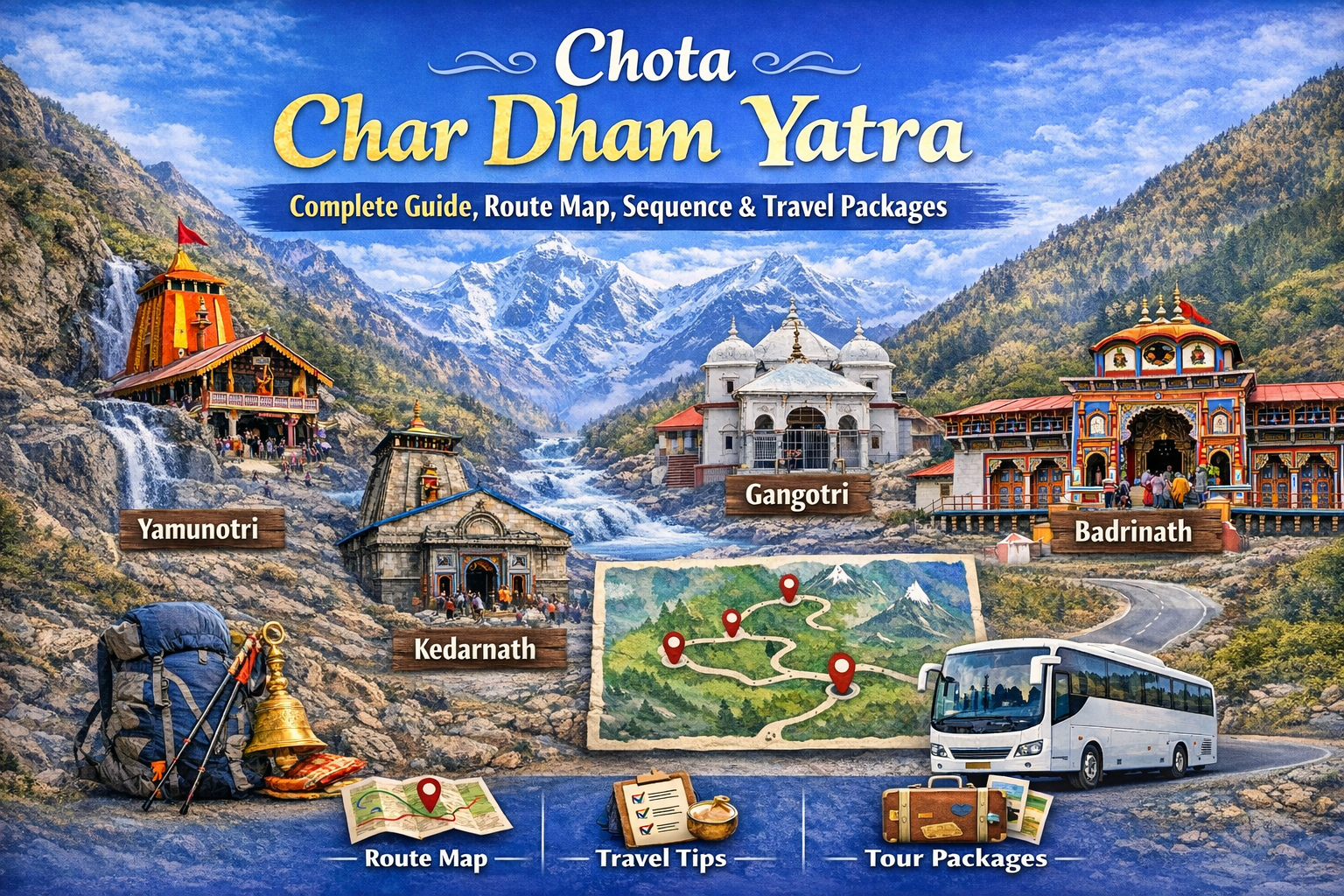
The Chota Char Dham Yatra is one of the most sacred pilgrimages in India, drawing thousands of devotees to the majestic Himalayas every year. Nestled in the divine landscapes of Uttarakhand, this spiritual journey takes pilgrims to four revered temples: Yamunotri, Gangotri, Kedarnath, and Badrinath, each associated with deep religious beliefs, mythological stories, and natural wonders.
For centuries, this Hindu pilgrimage has been regarded as a path to spiritual purification and divine blessings. Pilgrims undertake the journey not only to visit the holy temples of the Char Dham Yatra but also to experience the serene spiritual aura of the Garhwal Himalayas, where sacred rivers originate, and ancient temples stand as timeless symbols of devotion. Many devotees choose a well-planned Char Dham Yatra package to ensure a comfortable, organized, and spiritually fulfilling pilgrimage, allowing them to focus fully on worship, meditation, and connecting with the divine.
The Chota Char Dham Uttarakhand pilgrimage is considered a smaller yet equally powerful version of the broader Char Dham Yatra in India. Devotees believe that completing this sacred journey washes away sins and helps them attain spiritual peace and moksha.
In this comprehensive Char Dham Yatra guide, we will explore everything about the Chota Char Dham Yatra, including its route, traditional sequence, temple significance, mythological importance, travel routes, and the best Chota Char Dham Yatra package options for pilgrims.
Introduction to the Char Dham Yatra
The Char Dham Yatra is regarded as one of the most sacred and important spiritual journeys in Hinduism. The term “Char Dham” literally means “four sacred abodes of God,” representing powerful spiritual centers where devotees travel to seek divine blessings, purification, and spiritual growth. For centuries, pilgrims from across India have undertaken this journey with deep faith and devotion.
However, the Chota Char Dham Yatra specifically refers to the four sacred temples located in the Himalayan state of Uttarakhand. These temples form an important pilgrimage circuit in the Garhwal Himalayas and attract thousands of devotees every year.
The four temples included in the Chota Char Dham Yatra are:
-
Yamunotri – The sacred source of the River Yamuna and a temple dedicated to Goddess Yamuna.
-
Gangotri – The holy origin of the River Ganga, which is considered the most sacred river in Hinduism.
-
Kedarnath – One of the twelve Jyotirlingas of Lord Shiva, located in the majestic Himalayan mountains.
-
Badrinath – A revered temple dedicated to Lord Vishnu, situated on the banks of the Alaknanda River.
Together, these four shrines form the spiritual circuit of Yamunotri, Gangotri, Kedarnath, and Badrinath, which pilgrims traditionally visit in a specific order as part of the sacred journey. The pilgrimage usually begins from Yamunotri and ends at Badrinath.
Undertaking the Chota Char Dham Yatra is believed to purify the soul, remove past sins, and bring divine blessings to devotees. Beyond its religious importance, the journey also allows pilgrims to experience the breathtaking beauty of the Garhwal Himalayas, making it both a spiritual and deeply inspiring travel experience.
Meaning and Concept of Chota Char Dham in Uttarakhand
The term Chota Char Dham refers to the four sacred Himalayan temples that hold immense significance in Hindu religious traditions. These temples are considered powerful spiritual centers where devotees travel to seek blessings, inner peace, and spiritual purification.
Located in the majestic Garhwal Himalayas of Uttarakhand, these temples are surrounded by breathtaking natural landscapes that include towering mountains, glaciers, flowing rivers, lush valleys, and dense forests. The serene environment of the Himalayas creates a deeply spiritual atmosphere that enhances the overall pilgrimage experience. For many devotees, the journey through these sacred mountains is not just about visiting temples but also about connecting with nature and divine energy.
The Chota Char Dham Yatra is often seen as a sacred spiritual path where pilgrims test their faith, endurance, and devotion. Traveling through high-altitude regions, long mountain roads, and trekking routes requires dedication and determination, which makes the journey even more meaningful for devotees.
The concept of the Chota Char Dham pilgrimage gained wider recognition after the great philosopher and spiritual reformer Adi Shankaracharya revived Hindu pilgrimage traditions in the 8th century. He played an important role in promoting these Himalayan temples as major centers of worship and spiritual learning.
Today, the Chota Char Dham Yatra attracts thousands of pilgrims and travelers every year from across India and around the world. Devotees undertake this sacred journey with the belief that visiting these holy temples helps cleanse past sins, strengthen faith, and bring spiritual transformation to their lives.
Overview of the Four Sacred Temples
The yatra includes four highly sacred temples located in different parts of Uttarakhand. Each of these temples holds deep religious significance and reflects the spiritual importance of Char Dham temples in Hindu tradition. These sacred shrines are closely connected with rich mythological stories, ancient traditions, and centuries-old pilgrimage practices.
Yamunotri Temple
Yamunotri is the first destination in the Chota Char Dham Yatra sequence. The temple is dedicated to Goddess Yamuna, who is worshipped as the divine river goddess. Yamunotri marks the sacred origin of the River Yamuna, one of the most important rivers in India.
The temple is located at an altitude of about 3,293 meters in the Garhwal Himalayas. Pilgrims usually begin their journey from Janki Chatti and undertake a 6 km trek through scenic mountain trails to reach the temple. The journey itself is considered a part of the spiritual discipline of the pilgrimage.
Near the temple lies the famous Surya Kund, a natural hot spring where devotees cook rice and potatoes as offerings to the deity. The water from this spring is believed to have divine healing properties.
Significance
-
Sacred source of the River Yamuna
-
Dedicated to Goddess Yamuna
-
Considered an important place for ritual purification
Gangotri Temple
Gangotri is the second destination in the Chota Char Dham Yatra and is associated with the sacred origin of the River Ganga, the most revered river in Hindu tradition. The Ganga is believed to possess divine powers that cleanse sins and purify the soul.
The Gangotri Temple is situated at an altitude of around 3,100 meters and is surrounded by majestic Himalayan peaks, glaciers, and forests. The peaceful environment adds to the spiritual significance of the place.
The actual glacial origin of the River Ganga is located at Gomukh Glacier, about 19 kilometers from Gangotri, which is considered an important trekking destination for spiritual seekers and adventure travelers.
Significance
-
Sacred origin of the River Ganga
-
Dedicated to Goddess Ganga
-
One of the holiest pilgrimage sites in India
Kedarnath Temple
Kedarnath Temple is one of the most significant shrines in the Chota Char Dham Yatra and holds immense importance in Hindu mythology. The temple is dedicated to Lord Shiva and is one of the twelve Jyotirlingas in India, making it one of the most sacred Shiva temples in the country.
The Jyotirlinga Kedarnath Temple is located at an altitude of about 3,583 meters near the banks of the Mandakini River, surrounded by towering Himalayan peaks and glaciers. The temple’s remote location adds to its spiritual and mystical charm.
Pilgrims usually begin their journey from Gaurikund and undertake a challenging 16 km trek to reach the temple. Despite the difficulty, thousands of devotees complete this trek every year as a symbol of devotion and faith.
Significance
-
One of the 12 Jyotirlingas of Lord Shiva
-
Connected with the Pandavas from the Mahabharata
-
Represents devotion, penance, and spiritual transformation
Badrinath Temple
Badrinath is the final destination in the Chota Char Dham Yatra sequence. The temple is dedicated to Lord Vishnu and is one of the most important Vishnu temples in India. It is located between the Nar and Narayan mountain ranges, creating a beautiful and serene setting for worship.
The Badrinath Temple stands on the banks of the Alaknanda River and is an important part of both the Chota Char Dham pilgrimage and the larger Char Dham tradition of Hinduism.
According to mythology, Lord Vishnu is believed to have meditated at this sacred location, making the temple a powerful spiritual center for devotees seeking blessings and enlightenment.
Significance
-
One of the most sacred temples dedicated to Lord Vishnu
-
Associated with the meditation of Lord Vishnu
-
Considered an important site for attaining spiritual liberation (moksha)
Together, these four temples Yamunotri, Gangotri, Kedarnath, and Badrinath form the complete Chota Char Dham pilgrimage circuit, guiding devotees through a journey of faith, purification, and spiritual awakening in the heart of the Himalayas.
Spiritual and Religious Significance of the Pilgrimage
The Chota Char Dham Yatra is not just a physical journey through the mountains; it is considered a deeply spiritual experience that allows devotees to reconnect with divine energies and strengthen their faith. For centuries, pilgrims have undertaken this sacred journey with devotion, believing that visiting these holy shrines brings spiritual purification and inner peace.
According to Hindu beliefs, traveling to the four sacred temples of Yamunotri, Gangotri, Kedarnath, and Badrinath helps devotees experience a powerful sense of spiritual renewal. The journey itself, which passes through the serene landscapes of the Himalayas, is often seen as a path of devotion and self-reflection.
Many devotees believe that completing the Chota Char Dham Yatra helps them:
-
Cleanse past sins and purify the soul
-
Seek divine blessings from sacred deities
-
Achieve spiritual awakening and inner peace
-
Move closer toward attaining moksha, or spiritual liberation
For many pilgrims, the experience of traveling through the sacred Himalayan routes, visiting ancient temples, and participating in religious rituals becomes a life-changing spiritual journey that leaves a lasting impact on their faith and devotion.
Mythological Stories Associated with the Char Dham Temples
Each temple included in the Chota Char Dham Yatra is associated with fascinating mythological stories that have been passed down through generations. These legends add deeper spiritual meaning to the pilgrimage and strengthen the devotion of pilgrims visiting these sacred shrines.
Yamunotri
The temple of Yamunotri is dedicated to Goddess Yamuna, who is believed to be the daughter of Surya, the Sun God, and the sister of Yama, the god of death. According to Hindu belief, worshipping Goddess Yamuna protects devotees from untimely death and brings long life and prosperity. Pilgrims visit Yamunotri with faith that the blessings of the goddess will purify their lives and remove suffering.
Gangotri
One of the most famous legends in Hindu mythology is connected with Gangotri and the descent of the River Ganga to Earth. According to ancient scriptures, King Bhagiratha performed intense penance and devotion to bring the holy river from heaven to Earth so that the souls of his ancestors could attain salvation. Pleased by his devotion, the river descended to Earth, and Lord Shiva controlled its powerful flow by holding it in his matted hair before releasing it gently to the land.
Kedarnath
The sacred Kedarnath Temple is closely linked with the story of the Pandavas from the Mahabharata. After the Kurukshetra war, the Pandavas sought forgiveness from Lord Shiva for the sins committed during the battle. Lord Shiva initially avoided them and took the form of a bull to hide in the Himalayas. When the Pandavas discovered him, Shiva disappeared into the ground, and the hump of the bull appeared at Kedarnath, which is worshipped today as the Jyotirlinga of Lord Shiva.
Badrinath
According to mythology, Lord Vishnu once meditated in the peaceful Himalayan region where the Badrinath Temple now stands. During his meditation, Goddess Lakshmi protected him from the harsh weather by taking the form of a Badri tree. Because of this divine story, the place came to be known as Badri-nath, meaning the lord of the Badri forest.
These mythological stories make the Chota Char Dham Yatra not only a pilgrimage through sacred temples but also a journey through the rich spiritual heritage and traditions of Hinduism.
Importance of the Holy Rivers Yamuna and Ganga
Two of the most sacred rivers in India are closely connected with the Chota Char Dham Yatra. These rivers hold deep religious importance in Hinduism and are worshipped as divine sources of spiritual purification and blessings. Pilgrims visiting the Char Dham temples often pay special respect to these holy rivers during their journey.
River Yamuna
The River Yamuna originates near the Yamunotri Glacier in the Garhwal Himalayas. The Yamunotri Temple, dedicated to Goddess Yamuna, marks the spiritual beginning of the Chota Char Dham Yatra. In Hindu tradition, the Yamuna is worshipped as a divine goddess who is believed to bless devotees with protection, good health, and long life.
Pilgrims visiting Yamunotri often perform rituals and prayers near the sacred river to seek the blessings of Goddess Yamuna. The river is also associated with purity and spiritual cleansing.
River Ganga
The River Ganga is regarded as the holiest river in Hinduism and holds immense spiritual significance for millions of devotees. The Gangotri Temple marks the sacred origin of the Ganga in the Himalayas, although the actual glacial source is located at Gomukh Glacier.
According to Hindu belief, bathing in the holy waters of the Ganga helps purify the soul, remove sins, and bring spiritual liberation. For this reason, pilgrims visiting Gangotri often perform sacred rituals and offer prayers along the riverbanks.
Both the Yamuna and Ganga rivers play a central role in the spiritual importance of the Chota Char Dham Yatra, symbolizing purity, divine blessings, and the sacred connection between nature and spirituality.
Geographical Location in the Garhwal Himalayas
All four temples of the Chota Char Dham Yatra are located in the majestic Garhwal Himalayas of Uttarakhand, one of the most scenic and spiritually significant regions of India. The temples are situated at high altitudes and are surrounded by breathtaking natural landscapes that create a peaceful and divine atmosphere for pilgrims.
The Garhwal Himalayan region is known for its remarkable natural beauty, which includes:
-
Snow-capped mountain peaks that dominate the skyline
-
Dense alpine forests filled with rich Himalayan flora and fauna
-
Glaciers and sacred rivers that originate from the high mountains
-
High-altitude valleys and meadows offering stunning panoramic views
As pilgrims travel through winding mountain roads, river valleys, and picturesque towns, they experience the serene beauty of the Himalayas at every step of the journey. The calm environment, fresh mountain air, and flowing rivers create a setting that encourages prayer, reflection, and spiritual connection.
The scenic beauty of the Himalayas adds a unique and divine dimension to the Chota Char Dham Yatra, making the pilgrimage not only a religious journey but also an unforgettable experience in nature. For many devotees, the spiritual atmosphere of these mountains deepens their sense of devotion and makes the journey even more meaningful.
Traditional Pilgrimage Route and Sequence
The Chota Char Dham Yatra route follows a traditional pilgrimage path that has been practiced by devotees for centuries. The journey is usually undertaken in a clockwise direction, starting from the westernmost temple and gradually moving toward the eastern and northern regions of the Garhwal Himalayas. This sequence is followed for both religious and geographical reasons, making the journey. The Garhwal Himalayan region is known for its remarkable natural beauty, which includes spiritually meaningful and practically convenient for travelers.
Traditional Chota Char Dham Yatra Sequence
The pilgrimage traditionally follows this order:
-
Yamunotri
-
Gangotri
-
Kedarnath
-
Badrinath
Pilgrims begin their journey at Yamunotri, the sacred source of the River Yamuna, and then proceed to Gangotri, the origin of the holy River Ganga. After visiting these river shrines, devotees continue to Kedarnath, the revered temple of Lord Shiva and one of the twelve Jyotirlingas. The final destination of the pilgrimage is Badrinath, the sacred temple dedicated to Lord Vishnu.
This sequence is believed to represent a spiritual path of purification, where pilgrims gradually move closer to divine blessings through devotion and prayer.
Many pilgrims begin their Chota Char Dham Yatra from important gateway cities such as Haridwar, Rishikesh, or Dehradun, which serve as the main starting points for traveling into the Garhwal Himalayan region of Uttarakhand. From these cities, pilgrims follow the mountain routes that lead to each of the four sacred temples.
Chota Char Dham Yatra Map and Route
Understanding the Chota Char Dham Yatra map is very helpful for pilgrims and travelers when planning their journey through the Himalayan region of Uttarakhand. Since the temples are located in different mountain valleys, knowing the traditional travel route helps ensure a smooth and well-organized pilgrimage.
Most Chota Char Dham Yatra routes begin from major spiritual cities such as Haridwar, Rishikesh, or Dehradun, which serve as the main gateway to the Garhwal Himalayas. From these cities, pilgrims travel through scenic mountain roads and towns before reaching each temple in the traditional sequence.
Typical Chota Char Dham Yatra Route
A commonly followed route for the pilgrimage is:
Haridwar → Barkot → Yamunotri → Uttarkashi → Gangotri → Guptkashi → Kedarnath → Joshimath → Badrinath → Haridwar
This route allows pilgrims to visit all four sacred temples in the traditional order while passing through important towns that serve as rest and accommodation points during the journey.
Depending on the itinerary and travel plan, the complete Chota Char Dham Yatra usually covers around 1,600 kilometers of travel through the mountainous terrain of Uttarakhand. The journey includes a combination of road travel and trekking, especially to reach the temples of Yamunotri and Kedarnath.
Following the Char Dham Yatra guide helps travelers manage travel time, plan overnight stays, and experience the pilgrimage in a comfortable and organized manner.
Natural Beauty and Himalayan Landscape
One of the most remarkable aspects of the Char Dham Yatra is the mesmerizing natural beauty that surrounds the pilgrimage route. As travelers move through the sacred valleys of the Garhwal Himalayas, they witness some of the most breathtaking landscapes in northern India. The journey itself becomes a memorable experience where spirituality and nature come together in perfect harmony.
Throughout the pilgrimage, devotees and travelers encounter a variety of stunning Himalayan sights, including:
-
Snow-covered mountain peaks rising high above the valleys
-
Deep river valleys carved by sacred Himalayan rivers
-
Waterfalls, glaciers, and flowing streams along the mountain routes
-
Scenic winding mountain roads offering spectacular panoramic views
The peaceful environment, fresh mountain air, and untouched beauty of the Himalayas create a calm and spiritual atmosphere for pilgrims. Many travelers feel a deep sense of peace and connection with nature while passing through these sacred landscapes.
The journey through the Garhwal Himalayas makes the Chota Char Dham Yatra not only a sacred pilgrimage but also a visually unforgettable travel experience that leaves a lasting impression on every devotee.
Pilgrimage Experience and Devotion of Travelers
Every year, thousands of devotees undertake the Char Dham Yatra with deep faith, devotion, and spiritual determination. For many pilgrims, this journey is not simply about visiting temples but about experiencing a profound connection with divine energy while traveling through the sacred Himalayas.
The pilgrimage often involves several physical and spiritual challenges that test the dedication of devotees. During the journey, pilgrims may experience:
-
Long trekking routes, especially to reach temples like Yamunotri and Kedarnath
-
Challenging mountain roads and high-altitude travel through the Garhwal Himalayas
-
Participation in spiritual rituals, prayers, and temple ceremonies
-
Moments of reflection, devotion, and meditation in the serene Himalayan environment
Despite the physical effort and demanding travel conditions, many devotees describe the experience as deeply fulfilling. The sense of devotion, the peaceful surroundings of the Himalayas, and the opportunity to visit ancient sacred temples bring immense spiritual satisfaction and inner peace.
For many pilgrims, completing the Char Dham Yatra becomes a memorable and life-changing spiritual journey that strengthens their faith and devotion.
Best Time to Undertake the Chota Char Dham Yatra
The Chota Char Dham Yatra generally begins in April or May each year when the temple doors open for devotees after the winter season. These opening days are considered the official dates for Char Dham Yatra, and they are announced every year according to the Hindu calendar. The pilgrimage continues until October or early November, depending on weather conditions in the Himalayan region of Uttarakhand. During these months, thousands of pilgrims travel to Uttarakhand to visit the four sacred temples and complete the spiritually significant Char Dham pilgrimage.
The most favorable months to undertake the Char Dham Yatra are:
-
May
-
June
-
September
-
October
During this period, the weather is relatively stable, the roads remain accessible, and travel conditions are safer for pilgrims visiting the high-altitude temples.
The monsoon months of July and August may bring heavy rainfall and occasional landslides in the Himalayan region, which can make travel more challenging. Meanwhile, during the winter season, heavy snowfall covers the temple areas, and the shrines remain closed for several months. The idols of the deities are then moved to nearby winter temples where worship continues until the next pilgrimage season begins.
Travel Routes and Accessibility for the Chota Char Dham Yatra
The Chota Char Dham Yatra in Uttarakhand is well connected through air, rail, and road networks, making it accessible for pilgrims traveling from different parts of India. Most pilgrims begin their journey from the gateway cities of Haridwar, Rishikesh, or Dehradun, which provide convenient access to the Himalayan pilgrimage route.
By Air
The nearest airport to begin the Chota Char Dham Yatra is Jolly Grant Airport in Dehradun. This airport has regular flights connecting it to major cities such as Delhi and other parts of India. From the airport, pilgrims can continue their journey by road toward the Char Dham destinations.
By Rail
Several railway stations provide convenient rail connectivity for travelers planning the pilgrimage. The nearest major railway stations include:
-
Haridwar Railway Station
-
Rishikesh Railway Station
-
Dehradun Railway Station
These stations are well connected to major Indian cities and serve as common starting points for pilgrims heading toward the Himalayan temples.
By Road
The Chota Char Dham temples are primarily connected through a network of mountain highways and roads. Well-developed road routes link Haridwar, Rishikesh, and Dehradun to important towns such as Barkot, Uttarkashi, Guptkashi, and Joshimath, which serve as key stops along the pilgrimage route.
Pilgrims can travel by private vehicles, buses, taxis, or organized tour packages, making road travel the most common way to reach the sacred Char Dham destinations.
Importance of the Pilgrimage for Spiritual Purification
The Chota Char Dham Yatra holds immense spiritual significance in Hindu traditions and is considered one of the most sacred pilgrimages in India. For centuries, devotees have undertaken this holy journey with deep faith, believing that visiting the four Himalayan temples brings divine blessings and spiritual purification.
According to Hindu beliefs, the pilgrimage to Yamunotri, Gangotri, Kedarnath, and Badrinath represents a sacred path toward spiritual growth and inner peace. The journey through the serene landscapes of the Himalayas, combined with temple prayers and rituals, allows devotees to strengthen their connection with the divine.
Many pilgrims believe that completing the Chota Char Dham Yatra helps them:
-
Remove negative karma accumulated through past actions
-
Purify the soul through prayers and sacred rituals
-
Strengthen devotion and faith in God
-
Move closer toward spiritual liberation (moksha)
For many believers, undertaking and completing this sacred pilgrimage is a lifelong spiritual aspiration. The journey is often seen as a meaningful step toward spiritual fulfillment, bringing peace, devotion, and a deeper understanding of faith.
Chota Char Dham Yatra Package and Travel Planning
Many pilgrims prefer booking an organized Chota Char Dham Yatra package to make their journey easier and more convenient. Since the pilgrimage involves traveling through remote Himalayan regions and visiting multiple temples, a well-planned tour package helps ensure a smooth and comfortable experience.
Most Char Dham Yatra packages are designed to take care of the essential travel arrangements so that pilgrims can focus on the spiritual aspect of the journey. These packages typically include:
-
Transportation between the pilgrimage destinations
-
Accommodation at hotels or guesthouses along the route
-
Meals during the travel itinerary
-
Temple visits and darshan arrangements
-
Guided assistance for navigation and travel support
One of the most popular options among travelers is the Char Dham Yatra package from Haridwar, as Haridwar serves as a major starting point for the pilgrimage.
Pilgrims can also choose from different types of tour options depending on their preferences and budget, such as:
-
Standard or budget pilgrimage tours
-
Comfortable family travel packages
-
Luxury helicopter tours for quicker temple visits
Choosing a well-organized Chota Char Dham Yatra package helps pilgrims manage travel logistics efficiently and ensures a safe, comfortable, and spiritually fulfilling pilgrimage experience in the Himalayas.
Final Thoughts
The Chota Char Dham Yatra is much more than a simple pilgrimage; it is a profound spiritual journey through the sacred and breathtaking landscapes of the Garhwal Himalayas. For centuries, devotees have traveled through these mountains with deep faith, seeking divine blessings and spiritual transformation.
Visiting the four holy temples - Yamunotri, Gangotri, Kedarnath, and Badrinath - allows pilgrims to experience the powerful spiritual energy associated with sacred rivers, ancient shrines, and centuries-old religious traditions. Each destination in the journey holds unique religious significance and offers devotees an opportunity to connect with divine forces through prayer, rituals, and devotion.
As pilgrims move through the serene Himalayan valleys, they not only witness the beauty of nature but also experience moments of reflection, peace, and spiritual awakening. The sacred rivers, towering mountains, and tranquil temple surroundings create an atmosphere that strengthens faith and devotion.
Whether undertaken for religious faith, spiritual devotion, personal reflection, or the pursuit of inner peace, the Chota Char Dham Yatra continues to be one of the most meaningful and transformative journeys in Hindu tradition.
For those seeking spiritual purification, divine blessings, and a deeper connection with the sacred, this revered pilgrimage offers a truly unforgettable path toward spiritual fulfillment and inner harmony.
Frequently Asked Questions for the Chota Char Dham Yatra Guide and Travel Packages
1. What is the best time to visit Chota Char Dham temples?
Ans: The ideal window is from May to June and September to October. During these months, the weather is stable and the temple gates are open. Kinghills Travels recommends booking early for May dates, as this is the peak period for pilgrimage.
2. Is registration mandatory for Chardham Yatra 2026?
Ans: Yes, biometric registration is compulsory for all pilgrims. You must register through the official Uttarakhand government portal. Kinghills Travels provides assistance with the registration process to ensure all travelers have their Yatra E-Passes ready before departure.
3. What is the correct order to visit Chota Char Dham in Uttarakhand?
Ans: The traditional sequence is to move from West to East: Yamunotri, then Gangotri, followed by Kedarnath, and finally Badrinath. Kinghills Travels follows this clockwise Parikrama to respect the religious tradition of the circuit.
4. What is the religious significance of Chota Char Dham?
Ans: Each site is dedicated to a specific deity and sacred river, representing the essence of Hindu mythology. Completing the circuit is believed to lead to spiritual liberation. Kinghills Travels includes experienced guides who explain the deep history of each shrine during the tour.
5. How can I reach Chota Char Dham by train?
Ans: The nearest major railway stations are Haridwar and Rishikesh. Since the temples are located in high-altitude areas, the rest of the journey must be completed by road. Kinghills Travels coordinates seamless pickup services from Haridwar station for all road-based itineraries.
6. Why are the rivers Yamuna and Ganga important in the Yatra?
Ans: The Yamuna and Ganga are the two holiest rivers in India. A ritual dip at their origins (Yamunotri and Gangotri) is considered the first step in purifying the soul. Kinghills Travels ensures that pilgrims have sufficient time at these sites to perform their prayers and rituals comfortably.
7. How many days are required for Chota Char Dham Yatra by road?
Ans: A standard road trip starting from Haridwar usually takes 10 to 12 days. This timeframe accounts for the steep climbs and the necessary rest periods. Kinghills Travels offers customized itineraries that can be adjusted based on the physical fitness of the group.
8. Can we reach Chota Char Dham by air?
Ans: Yes, the nearest airport is Jolly Grant Airport in Dehradun. From there, you can take a helicopter to the shrines. Kinghills Travels specializes in helicopter packages that can complete the entire Yatra in 5 to 6 days for those looking to save time.
9. Where are the geographical locations of Char Dhams?
Ans: The shrines are located across three districts in the Garhwal Himalayas: Yamunotri and Gangotri in Uttarkashi, Kedarnath in Rudraprayag, and Badrinath in Chamoli. Kinghills Travels utilizes local drivers who are highly experienced in navigating these specific mountain terrains.
10. How do I find a reliable Chota Char Dham Yatra Package?
Ans: A reliable package should include transport, accommodation, and registration support. Kinghills Travels offers comprehensive Chota Char Dham Yatra Packages and Travel Planning that focus on safety, comfort, and a spiritually fulfilling experience for families and solo travelers alike.