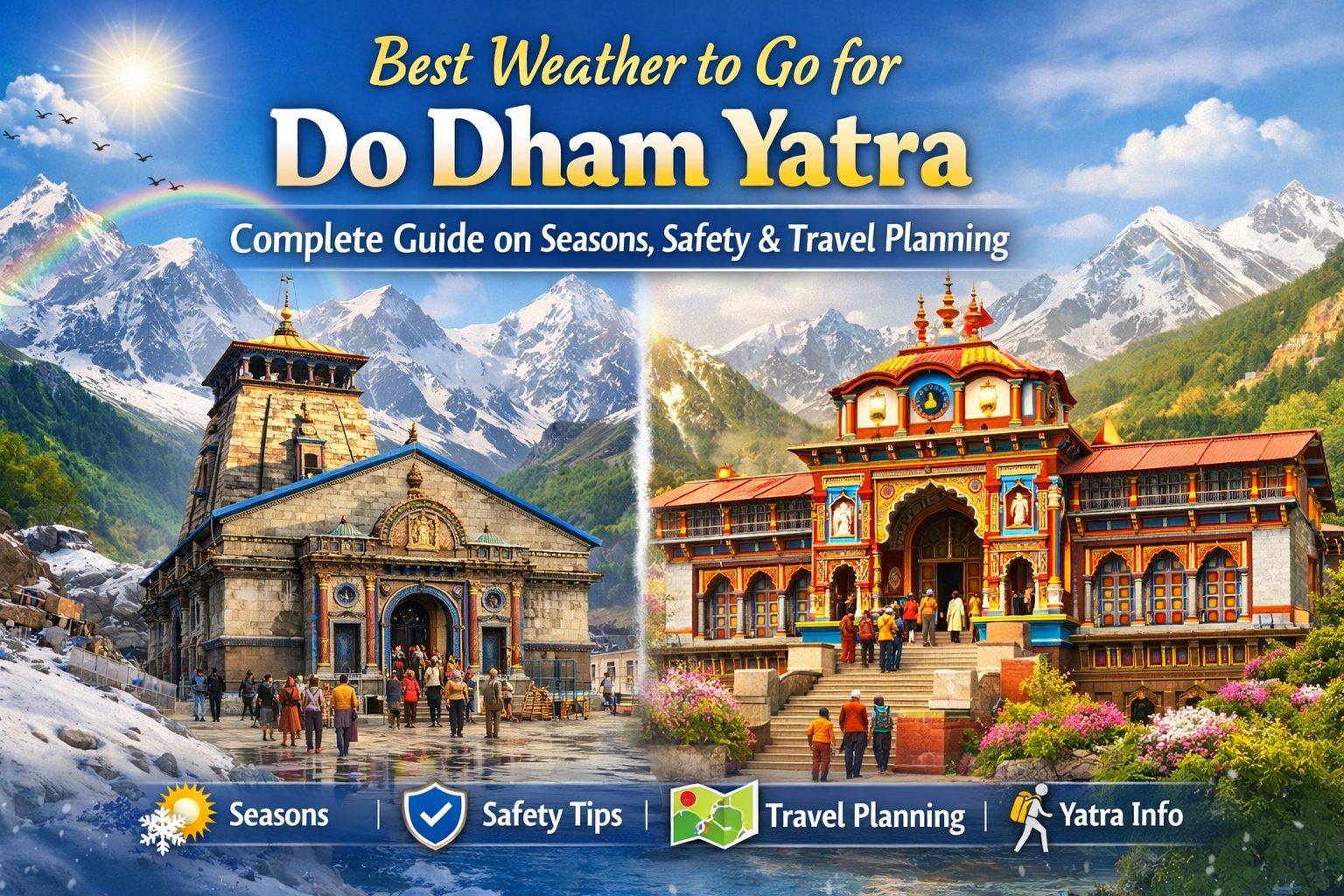
Starting the sacred Do Dham Yatra is a profound spiritual journey through the majestic Garhwal Himalayas. However, the unpredictable high-altitude weather can be the biggest challenge for any pilgrim. Planning your trip around the right season is not just about comfort; it's about safety and having the best possible experience.
This complete Do Dham travel guide is designed to help you understand the climate of Uttarakhand. We will provide a detailed breakdown of the best weather, a month-by-month analysis, and temperature expectations for Kedarnath and Badrinath. We'll also cover crucial safety and travel planning tips to make sure your pilgrimage is safe, smooth, and spiritually fulfilling.
Understanding the Do Dham Yatra & Its High-Altitude Climate
Before we look at the weather, it's important to understand what the Do Dham Yatra involves. This pilgrimage takes you deep into the Garhwal region, where weather patterns are unique and demand respect. This is not just a trip; it's a journey into a powerful and sometimes harsh environment.
What is the Do Dham Yatra? (Kedarnath & Badrinath)
The Do Dham Yatra in Uttarakhand typically refers to the pilgrimage to two of the four holy sites of the Char Dham Yatra: Kedarnath and Badrinath.
-
Kedarnath: Dedicated to Lord Shiva, this ancient temple is set against a spectacular backdrop of snow-clad peaks.
-
Badrinath: Dedicated to Lord Vishnu, this vibrant temple is one of the most revered holy sites in Hinduism.
While the full Char Dham Yatra also includes Yamunotri and Gangotri, many pilgrims choose the Do Dham Yatra for a more focused spiritual journey.
The Significance of a Spiritual Journey in the Himalayas
For centuries, the Himalayas have been a place of immense spiritual power. A pilgrimage here is believed to cleanse one's sins and bring them closer to moksha, or liberation.
The journey is as important as the destination. Walking through these mountains, breathing the pure air, and facing the natural challenges are all part of the experience. It's a test of faith and endurance that leaves a lasting impact on every pilgrim.
Why Himalayan Weather is a Critical Planning Factor
The weather in the high Himalayas is different from that in the plains. It can change in a matter of minutes. Bright sunshine can quickly turn into a cold downpour or even a sudden snowfall.
Because of this, the weather is the single most important factor in your planning. It affects:
-
Road conditions and landslide risk.
-
The accessibility of the temples.
-
Your health and safety at high altitudes.
-
What you need to pack to stay warm and dry.
Official Temple Opening (Akshaya Tritiya) & Closing (Bhai Dooj) Dates
The temples of Kedarnath and Badrinath are not open year-round. They are covered in heavy snow for about six months.
-
Opening Day: The temples typically open on the auspicious occasion of Akshaya Tritiya, which usually falls in late April or early May.
-
Closing Day: The doors close for the winter around Bhai Dooj or Diwali, usually in late October or early November.
The exact dates are decided each year by the Badarinath-Kedarnath Mandir Samiti (the temple committee) and are a key part of planning your trip.
The Best Time for Do Dham Yatra: A Quick Overview
If you need a quick answer, the pilgrimage season is divided into two ideal windows. This gives you a snapshot of the best months to book your Kedarnath Badrinath tour package, helping you avoid the difficult monsoon and severe winter.
The Two Prime Windows: Pre-Monsoon vs. Post-Monsoon
The best time for the Do Dham Yatra is split into two main periods:
-
Pre-Monsoon (May to June): This is the summer season. The weather is pleasant, the snow has melted, and the pilgrimage is in full swing.
-
Post-Monsoon (September to October): This is the autumn season. The monsoon rains have passed, leaving behind clean air, clear skies, and beautiful green landscapes.
Both windows offer a great experience, but they are slightly different.
Quick Comparison: May-June vs. September-October
Why Monsoon (July-August) and Winter (Nov-April) are Avoided
It's very important to know why the other seasons are not recommended.
-
Monsoon (July - August): This period sees very heavy rainfall in Uttarakhand. This leads to a high risk of landslides, which can block roads for days. Travel becomes dangerous and unpredictable.
-
Winter (November - April): The entire region is covered in deep snow. Temperatures fall far below freezing, making travel nearly impossible. The main temples at Kedarnath and Badrinath are closed during this time.
Role of the Char Dham Temple Committee in Deciding Dates
The Char Dham temple committee, also known as the Badarinath-Kedarnath Mandir Samiti, plays a central role. They consult with priests and astrologers to determine the exact opening and closing dates of the temples each year. These dates officially mark the start and end of the safe pilgrimage season.
Seasonal Weather Guide for Your Do Dham Yatra
A detailed look at each season is key for any Do Dham travel guide. Here, we break down the conditions, temperatures, and the pros and cons of traveling during summer, monsoon, and autumn.
Summer Season (May - June): The Peak Pilgrimage Time
This is the most popular time for the Do Dham Yatra. The weather is generally favorable, with the winter chill having subsided.
-
Weather: Days are pleasantly sunny, making trekking and sightseeing comfortable.
-
Temperatures: Daytime temperatures can range from 10°C to 20°C. Nights, however, remain quite cold, often dropping to 5°C or lower.
-
Pros: The weather is stable and ideal for travel. All facilities, from guesthouses to shops, are fully operational.
-
Cons: This is the peak season, so expect large crowds. You'll need to book your Do Dham Yatra package and accommodations well in advance.
Monsoon Season (July - August): A Period of High Risk & Caution
We strongly advise against planning your yatra during these months. The Indian monsoon hits the Garhwal Himalayas with full force.
-
Weather: Constant and heavy rainfall is common. The skies are usually overcast, and visibility can be poor.
-
Temperatures: The rain brings a chill, with temperatures ranging from 8°C to 16°C.
-
Pros: The landscape is incredibly green and lush. There are almost no crowds.
-
Cons: The risk of landslides is extremely high. Roads can get blocked for long periods, leaving pilgrims stranded. Travel is very unsafe.
Autumn Season (September - October): The Golden Window for Pilgrims
Many experienced travelers believe this is the best weather to go for do dham yatra. The monsoon has washed away the dust, leaving the air fresh and the views crystal clear.
-
Weather: The weather is stable, with clear blue skies and bright sunshine.
-
Temperatures: September is pleasant, with temperatures similar to June. By October, the cold starts to set in, and nights can be freezing.
-
Pros: The views of the Himalayan peaks are spectacular. The crowds are much smaller, allowing for a more peaceful and spiritual journey.
-
Cons: It gets colder as October progresses. You must be prepared for freezing temperatures, especially in the early mornings and late evenings.
Winter Season (November - April): When the Dhams are Closed (Winter Abodes)
During winter, the temples at Kedarnath and Badrinath are closed to the public. The idols of the deities are ceremoniously moved to their winter homes.
-
Kedarnath's Winter Home: The deity is worshipped at the Omkareshwar Temple in Ukhimath.
-
Badrinath's Winter Home: The deity is worshipped at the Narsingh Temple in Joshimath.
-
Gangotri's Winter Home: The idol moves to Mukhba.
-
Yamunotri's Winter Home: The idol is kept at Kharsali.
Travel to the main shrines is not possible due to heavy snowfall and extreme cold.
Month-by-Month Analysis: Finding Your Perfect Travel Window
To help you decide on the best month to visit Char Dham, let's look at what you can expect each month the temples are open. This detailed breakdown will help you pick the perfect time for your journey.
Weather in Do Dham in May: The Yatra Begins
May marks the grand opening of the pilgrimage season. There's a lot of excitement and devotion in the air.
-
Conditions: The weather is generally sunny and pleasant during the day. You might still see some snow on the ground at higher altitudes near Kedarnath.
-
Crowds: Crowds are very high, as many people want to be among the first to have darshan.
-
Temperatures: Expect daytime temperatures of 10°C to 17°C, with night temperatures dropping to between 2°C and 5°C.
Do Dham Temperature in June: Pleasant Days, Cool Nights
June continues the peak season. The weather is at its most comfortable, but the crowds also peak this month.
-
Conditions: This is perhaps the warmest month of the yatra. The days are long and sunny, perfect for travel.
-
Crowds: June is extremely busy. It's essential to have all your bookings confirmed in advance.
-
Temperatures: Daytime temperatures can reach 15°C to 20°C. Nights are still chilly, around 5°C to 8°C.
Weather Challenges in July & August: Navigating the Rains
As the monsoon arrives, the yatra becomes very challenging. We do not recommend travel during this time.
-
Conditions: Expect frequent and heavy rain. The trails can become slippery and dangerous. Landslides are a constant threat.
-
Crowds: The number of pilgrims drops significantly due to the difficult conditions.
-
Temperatures: Temperatures are moderate, but the dampness can make it feel colder.
Do Dham Yatra in September: Clear Skies and Fewer Crowds
September is a wonderful month for the pilgrimage. The monsoon has retreated, leaving everything fresh and green.
-
Conditions: The skies are exceptionally clear, offering stunning views of the mountains. The weather is stable and ideal for trekking.
-
Crowds: The crowds are much smaller than in May and June, offering a more serene experience.
-
Temperatures: Daytime temperatures are comfortable, around 10°C to 15°C. Nights start to get colder.
October & Early November: The Onset of Winter's Chill
October is the final month for the yatra. It's a beautiful time to visit, but you must be prepared for the cold.
-
Conditions: The weather is crisp and clear. The autumn colors are beautiful. You might even experience the first light snowfall of the season.
-
Crowds: The crowds are very thin, making it a peaceful time for darshan.
-
Temperatures: The cold sets in quickly. Daytime temperatures are around 8°C to 12°C, while nights can easily drop below freezing (0°C).
Weather-Related Safety and Essential Travel Planning
Good planning is key to a safe spiritual journey. This section focuses on practical tips related to weather, from what to pack to health precautions for high-altitude travel.
What is the best thing to wear for the Char Dham Yatra?
The key is to dress in layers. This allows you to add or remove clothing as the temperature changes throughout the day. Your clothing should be warm, comfortable, and waterproof.
Essential Packing List: Layering for Unpredictable Weather
Here’s a simple checklist of essential clothing items:
-
Inner Layer: Thermal wear (tops and bottoms).
-
Mid Layer: Woolen sweaters or fleece jackets for warmth.
-
Outer Layer: A good quality, heavy windproof and waterproof jacket.
-
Bottoms: Comfortable trekking pants (avoid jeans).
-
Footwear: Sturdy, waterproof trekking shoes with good grip.
-
Accessories: Woolen socks, a warm cap or beanie, gloves, and a scarf or muffler.
-
Rain Gear: A raincoat or a poncho is a must-have, even outside the monsoon season.
Health & Acclimatization: Preparing for High Altitudes
High-altitude travel can cause Acute Mountain Sickness (AMS). To prevent this:
-
Acclimatize: Spend a day at a lower altitude before moving higher.
-
Stay Hydrated: Drink plenty of water throughout the day.
-
Go Slow: Walk at a slow and steady pace. Don't rush.
-
Consult a Doctor: Get a medical check-up before you leave, especially if you have existing health issues.
Road Safety: Understanding the Risk of Landslides in Monsoon
The roads in the Garhwal region are cut into the mountainside. During the monsoon, heavy rains can loosen the soil and rocks, causing landslides that block the roads. This is the primary reason why traveling in July and August is so risky. Always travel with a trusted operator who prioritizes safety.
How to Stay Updated with Real-Time Weather Forecasts in Uttarakhand
Before and during your trip, check the weather forecast regularly. You can use reliable weather apps on your phone. Local news channels and government websites also provide updates on weather and road conditions in the region.
How Weather Influences Your Do Dham Yatra Package & Costs
The weather doesn't just affect your experience; it also impacts the cost and availability of your Do Dham Yatra package. At Kinghills Travels, we help you choose the right tour for the right season.
Peak Season vs. Shoulder Season Pricing
-
Peak Season (May-June): High demand means higher prices for everything from hotels to taxis.
-
Shoulder Season (September-October): With fewer crowds, you can often find better deals on accommodations and travel.
Planning your trip in the shoulder season can offer a more budget-friendly and peaceful pilgrimage.
Choosing a Reliable Kedarnath Badrinath Tour Package
A good tour package takes the stress out of planning. When choosing one, make sure it includes:
-
Safe and reliable transportation.
-
Comfortable accommodations.
-
A well-planned itinerary that allows for acclimatization.
-
Guidance from experienced local drivers and guides.
At Kinghills Travels, we design our packages with your safety and comfort as the top priority, always keeping the local weather patterns in mind.
Helicopter Services: Availability and Weather Dependency
Helicopter services to Kedarnath are a popular option, but they are completely dependent on the weather. Flights can be delayed or canceled due to rain, fog, or high winds. September and October generally offer the clearest skies and the highest chance of uninterrupted helicopter services.
Booking Accommodations: Tips for Different Seasons
-
Peak Season (May-June): Book everything at least 2-3 months in advance. Good hotels and guesthouses fill up very quickly.
-
Shoulder Season (September-October): You have more flexibility, but it's still wise to book key accommodations in advance, especially in places like Kedarnath.
Conclusion
To summarize, the best weather to go for the Do Dham Yatra is during the pre-monsoon months of May and June or the post-monsoon window of September and October. These periods offer the best balance of pleasant temperatures, clear skies, and safer travel conditions for your pilgrimage.
By respecting the power of the Himalayas and planning your spiritual journey around its climate, you ensure a trip that is not only divine but also safe and memorable. Choose your time wisely, pack appropriately, and embark on this journey of a lifetime.
Frequently Asked Questions for the Best Time to Visit Do Dham Yatra
1. What is the best time for the Do Dham Yatra?
Ans: The best time is generally from May to June and September to October. During these windows, the skies are clear, and the temperatures are manageable for trekking. Kinghills Travels recommends the May-June period for those who prefer vibrant landscapes, while late September offers a crisp, post-monsoon clarity.
2. Is it safe to visit Kedarnath and Badrinath in the monsoon?
Ans: Traveling during July and August can be risky due to heavy rainfall and potential landslides in the Garhwal region. Kinghills Travels prioritizes weather-related safety by monitoring real-time updates from the IMD and may occasionally pause departures during high-alert monsoon days to protect our pilgrims.
3. How does the weather affect the Do Dham Yatra Package Cost?
Ans: Weather directly impacts demand; the "peak season" (May-June) typically sees higher prices for accommodation and transport. Conversely, Kinghills Travels often provides more budget-friendly packages during the shoulder months of October and early November, though travelers should be prepared for much colder temperatures.
4. What is the temperature in Kedarnath during May?
Ans: In May, daytime temperatures range between 10°C and 15°C, but they can drop to sub-zero levels at night. Kinghills Travels advises all guests to pack a layered clothing system, including thermal innerwear and heavy jackets, even during the "summer" months.
5. How weather affect your Do Dham Yatra Package Route?
Ans: Severe weather can lead to road closures at major points like Lambagar or landslides near Guptkashi. In such events, Kinghills Travels utilizes its local network to reroute travelers or provide safe stay-overs until the Border Roads Organization (BRO) clears the path.
6. What is the Do Dham Month-by-Month weather Analysis?
Ans: The weather varies significantly: May-June is pleasant; July-August is rainy and humid; September-October is cool and clear; and November is extremely cold with potential snow. Kinghills Travels provides a detailed month-by-month guide to help you choose a date that fits your physical endurance level.
7. Does it snow in Badrinath during October?
Ans: Early October is usually clear, but light snowfall can occur toward the end of the month as the closing dates for the temples approach. Kinghills Travels ensures that all vehicles used during this period are winter-ready to handle the dropping temperatures and icy road patches.
8. Can weather cause helicopter cancellations for Do Dham Yatra?
Ans: Yes, helicopters are highly sensitive to visibility, wind, and rain. If you book a helicopter add-on with Kinghills Travels, we maintain a flexible backup plan to ensure your darshan is completed via road or a rescheduled flight once the weather clears.
9. What are the do dham yatra weather-related safety tips?
Ans: Always carry a high-quality raincoat, stay hydrated to combat altitude sickness, and never trek during heavy fog or downpours. Kinghills Travels guides are trained in mountain safety and provide daily weather briefings to all group members before they begin their trek.
10. When do the Do Dham temples close for winter?
Ans: The temples typically close shortly after Diwali (late October or early November) due to heavy snow making the region inaccessible. Kinghills Travels organizes "Closing Ceremony" packages for those who wish to witness the final prayers of the season before the deities are moved to their winter seats.